Measuring Air Pollution
Air pollution can be directly measured as it is emitted by a source in mass/volume of emission (e.g., grams/m3) or mass/process parameter (e.g., grams/Kg fuel consumed or grams/second). Air pollution can also be measured in the atmosphere as a concentration (e.g., micrograms/m3). Ambient air monitoring data is used to determine air quality, establish the extent of air pollution problems, assess whether established standards are being met, and characterize the potential human health risk in an area. Alternatively, air pollution concentrations can be simulated using computer models, and then validated using data collected from direct measurements at selected monitors or sources. Air pollution data and models are used together to examine the impacts of control strategies on the ambient air.

Related links about Measuring Air Pollution
Subtopics
Air Quality Modeling
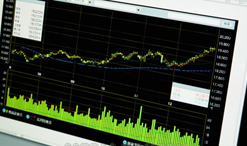
As an alternative to or in conjunction with direct monitoring, computer models are often used to predict the levels of pollutants emitted from various types of sources, and how these emissions eventually impact ambient air quality over time. The models themselves vary in terms of sophistication, accuracy and precision of their outputs. Different models are used to estimate emission rates, source activity levels, and ambient air quality impacts. For example, models are available for estimating emissions from mobile and stationary sources, predicting meteorological factors, locating potential emission point sources, and the likely photochemical and dispersion characteristics of air pollution, as well as predicting traffic patterns and congestion. In addition, emissions models and preprocessors can be used to provide input data for air quality models that need emissions based on chemical species, and broken down into very fine temporal (e.g., grams/second) and spatial (1 km x 1 km grid) resolution.
Related links about Air Quality Modeling
Monitoring
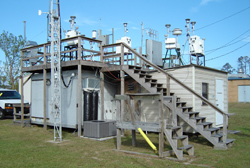
Air pollution monitoring activities are typically separated into two classifications: source monitoring and ambient air monitoring. Monitoring can be made directly using continuous measurement instrumentation or manual methods, or remotely using optical sensing systems. Source monitoring involves the measurement of emissions directly from a fixed or mobile emission source, typically in a contained duct, vent, stack or chimney. Stationary source data is used to determine control technology performance, confirm established permit limits are being met, and as input to ozone and/or health risk prediction models. Major stationary sources may have continuous emissions monitors (CEMs) installed to report real-time emissions based on pre-established reporting cycles. Ambient air monitoring involves the measurement of specific pollutants present in an immediate surrounding atmosphere. Most Major urban areas often operate several ambient air monitoring instruments, each dedicated to measuring specific target pollutants.
Related links about Monitoring
Subtopics
Top finds
- Casino En Ligne
- Non Gamstop Casinos
- Casinos Not On Gamstop
- European Betting Sites
- Non Gamstop Casino Sites
- New Betting Sites
- Non Gamstop Casino
- Casinos Not On Gamstop
- UK Online Casinos Not On Gamstop
- Non Gamstop Casinos UK
- Meilleur Casino Live Francais
- Casino En Ligne Avec Retrait Immédiat
- Non Gamstop Casino UK
- Casino En Ligne Fiable
- Online Casinos Canada
- Casino En Ligne Fiable
- Slots Not On Gamstop
- Gambling Sites Not On Gamstop
- Best Casino Sites UK
- Non Gamstop Casino
- Meilleur Casino En Ligne
- Non Gamstop Casino
- Betting Sites
- Betting Sites Not On Gamstop
- Best Horse Racing Betting Sites
- Casino Non Aams Sicuri
- Non Gamstop Casino
- Lista Casino Non Aams
- Crypto Casino
- Casino Crypto En Ligne
- Meilleur Site De Casino En Ligne Belgique
- I Migliori Casino Non Aams
- Meilleur Casino En Ligne De France
- Casino En Ligne 2026
- Nouveau Casino En Ligne Francais
- Meilleur Casino En Ligne
- Migliori Casino Online
- Casino En Ligne Fiable
- Casino En Ligne Français
- Crypto Casino Malaysia
- Lista Casino Non Aams
- Siti Non AAMS
- Miglior Bookmaker Non Aams
- Siti Non AAMS
- Siti Di Scommesse Non Aams
- Casino En Ligne Fiable